


In a country where thousands of refugees live in the shadows of legal invisibility, INTERSOS has chosen to stay and grow. In 2026, we expanded our legal assistance across Federal Iraq to ensure that no one is left without their rights.
Today, Iraq hosts approximately 350,000 refugees and asylum seekers, the vast majority of whom (88%) fled the crisis in Syria. The Kurdistan Region of Iraq (KRI) serves as the primary hub, hosting about 82% of the total refugee population.
However, the experience of seeking protection is not the same for everyone. While roughly 70% of people have managed to settle in urban areas, striving to integrate into the fabric of local communities, the remaining 30% still live within refugee camps. This scenario is further complicated by other critical situations: Iraqi refugees returning to their home country to rebuild their lives, and Internally Displaced Persons (IDPs). Approximately 102,000 Iraqis remain displaced within their own borders, unable to return home and residing in camps throughout the Kurdistan region.
In these displacement-affected areas, families often struggle to find stability. Beyond the immediate need for food and shelter, they face a silent but significant barrier: the lack of documentation. In Iraq, the inability to access ID cards, birth certificates, or residency permits can have devastating consequences—preventing children from enrolling in school, adults from finding formal employment, and families from accessing basic healthcare or moving freely within the country.
Our Commitment: Legal Assistance for Those in Need
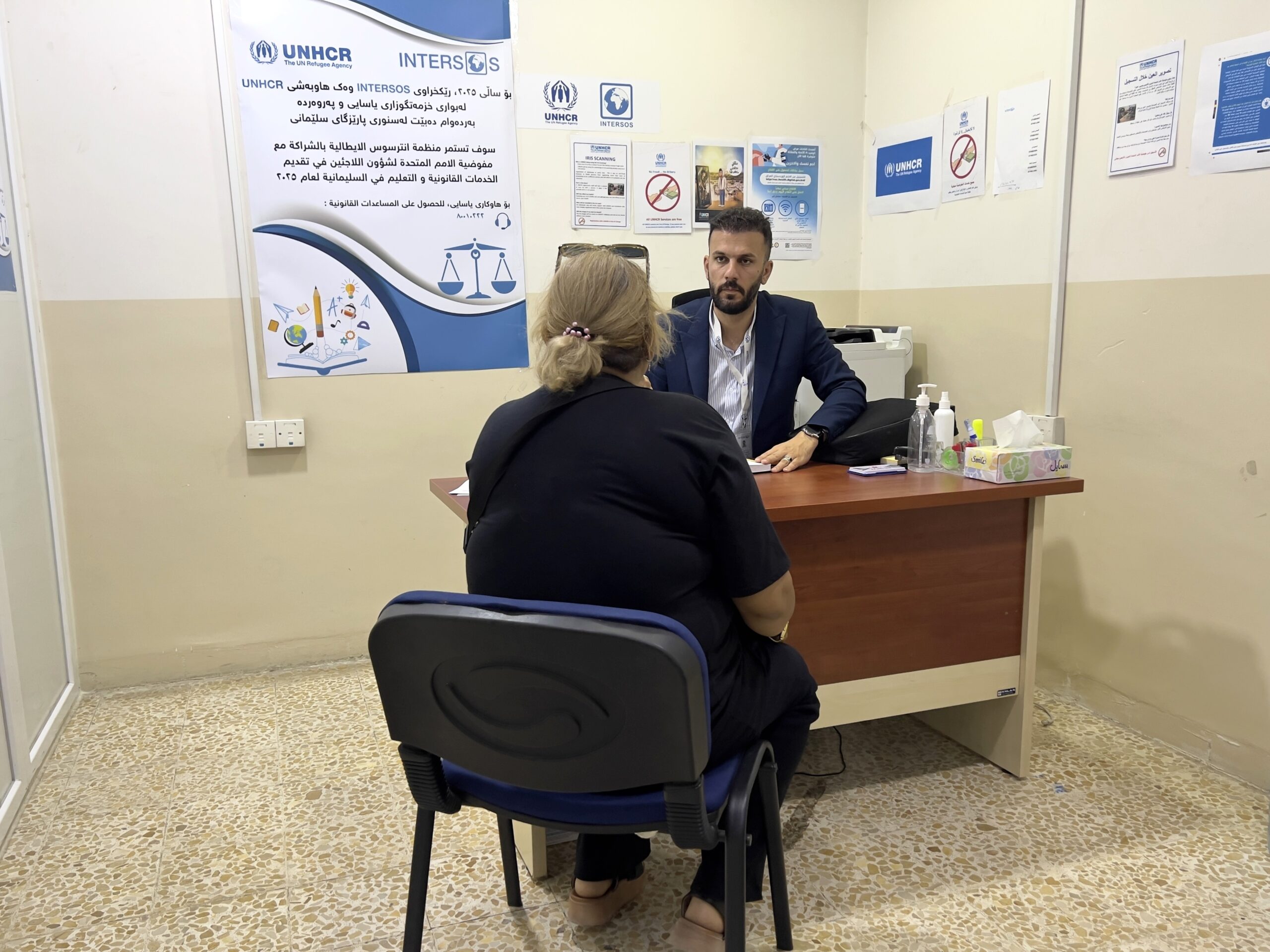
In collaboration with the United Nations High Commissioner for Refugees (UNHCR), INTERSOS works to break down these legal barriers. We provide support through a specialized team of lawyers offering legal counseling, representation before administrative bodies, and technical assistance for complex documentation cases.
While many international organizations are currently scaling back their presence in the region, INTERSOS has expanded its reach. In 2026, we extended our operations from the governorates of Erbil and Sulaymaniyah to cover the entirety of Federal Iraq, including central and southern governorates such as Kirkuk and Ninewa.
The true value of legal aid is best understood through the lives it transforms. Here is one example of how our teams support those in need:
Data 2024 and 2025:
23.507
individuals received legal assistance, representation or counseling
16.819
secured civil documentation
276
detained refugees and asylum seekers received legal assistance
Fighting Exploitation
A young Syrian refugee in the Kurdistan Region of Iraq fell victim to a fraudulent visa company that took his money and withheld his documents, leaving him without a valid residency permit. This not only exposed him to the risk of arrest but also threatened his chance at a resettlement interview with a foreign consulate. INTERSOS intervened by filing a formal complaint against the company and successfully advocating for an exceptional transit permit. The young man was able to attend his interview and is now reclaiming his legal rights, while our team works with the authorities to ensure this company cannot defraud others.
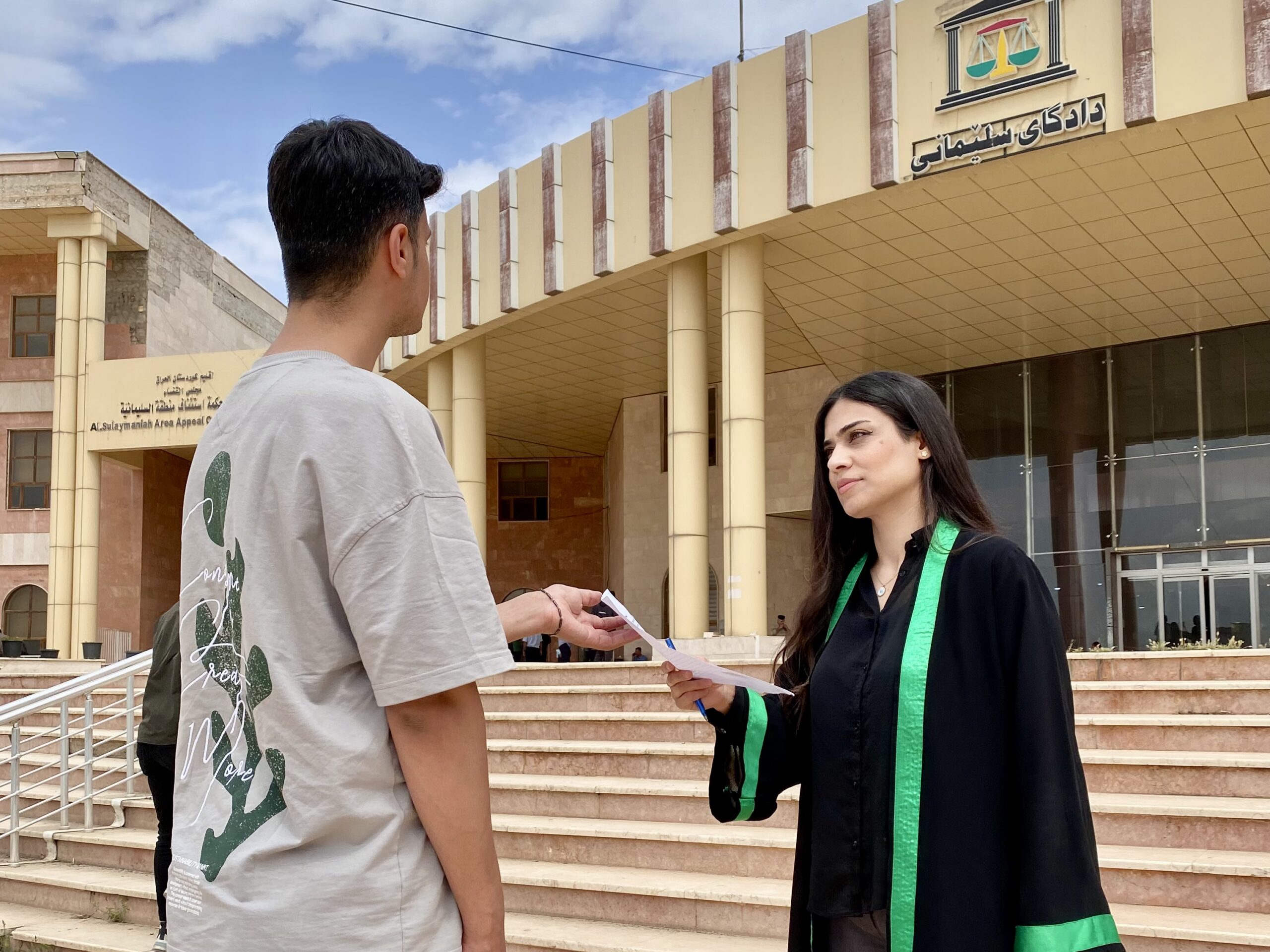
Justice for survivors
After enduring domestic violence and a divorce, a Syrian refugee woman found herself stripped of both her rights and her dignity. The legal system can be deeply intimidating for a survivor of abuse; however, with INTERSOS providing tailored support and courtroom representation, she successfully secured a ruling in her favor. Her case serves as a powerful reminder that with the right support, women can rewrite their stories and reclaim justice.
A Path to Education for Hamza
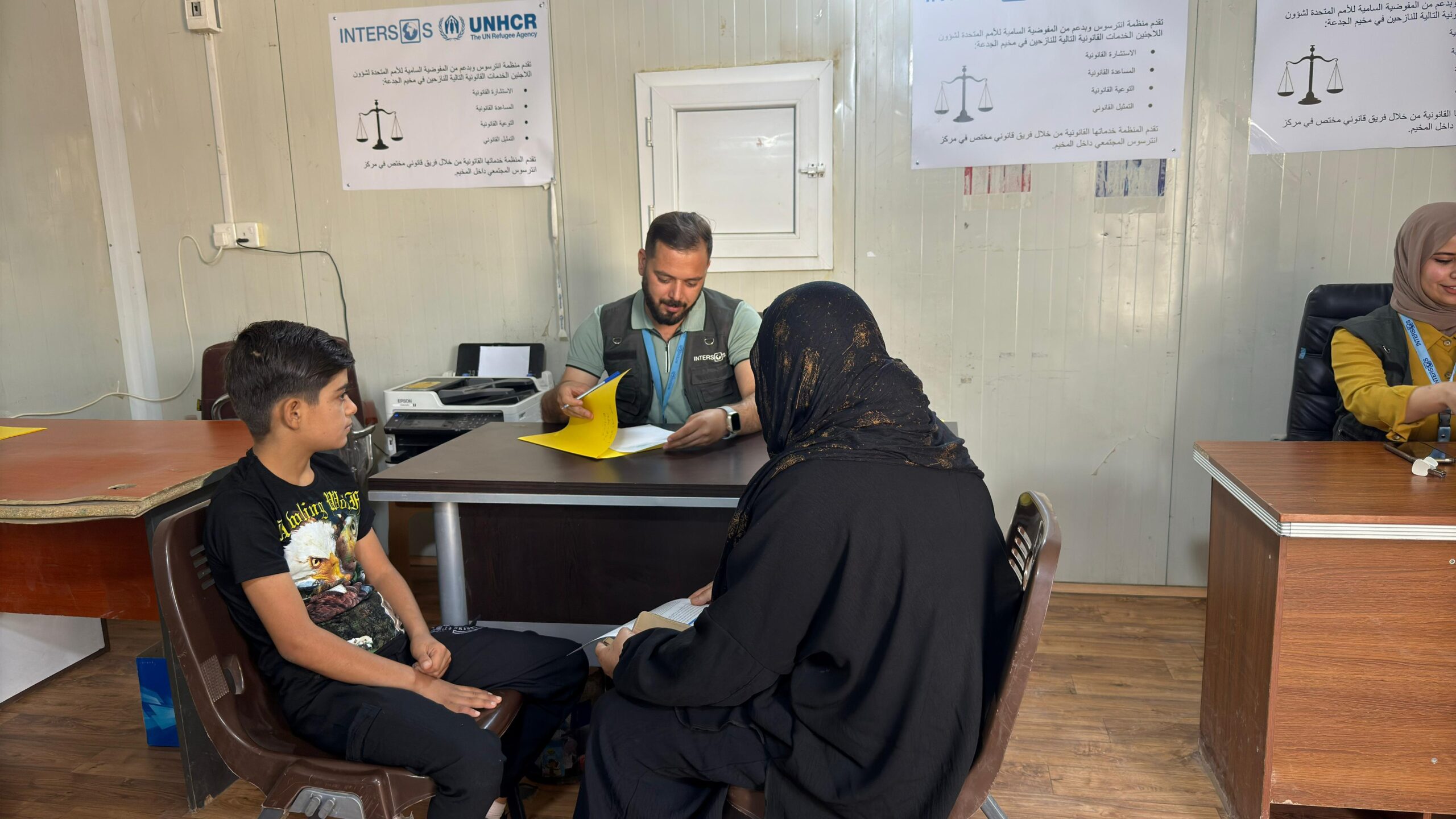
Ten-year-old Hamza, an Iraqi refugee, spent years in the Al-Hol camp in Syria before returning to Iraq. Her greatest wish was simply to go to school, but without an ID card, enrollment was legally impossible. Following an assessment, INTERSOS lawyers navigated the administrative hurdles to secure official documentation for Hamza and her family. Today, Hamza is one of the top students at the Al Amal Center school. “I want to become a doctor and treat people for free,” she says—a dream that is now a concrete possibility.
The expansion of our legal services in 2026 across Federal Iraq is more than a geographic growth; it is a reaffirmation of our commitment to those who remain in a state of legal and social vulnerability. Whether it is a child seeking an education, a survivor of violence seeking justice, or a refugee reclaiming their identity, the presence of a dedicated legal advocate is often the difference between stagnation and a new beginning.