



Emergency in the Middle East: hundreds of thousands of people displaced in the region
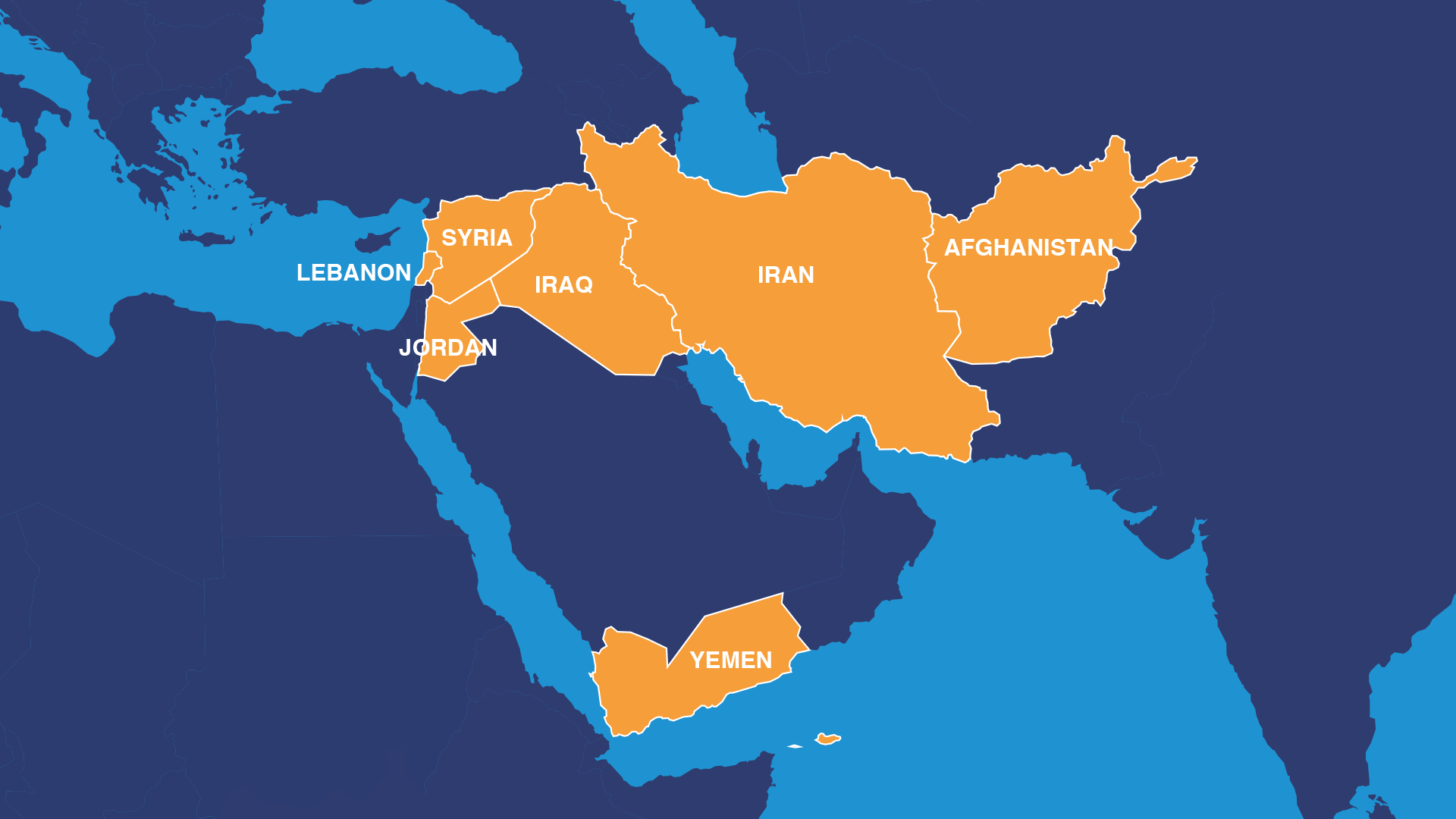
Escalating hostilities and airstrikes are fueling the humanitarian emergencies already underway, impacting the population and civilian infrastructure throughout the region. Despite the challenges, INTERSOS remains operational in Iran, Lebanon, Iraq, Jordan, Syria, Afghanistan and Yemen.
Since February 28, the Middle East has plunged into a dramatic new phase of violence. The war, which began with the attack by the Israeli-US coalition on Iran, quickly escalated into a full-scale conflict, with attacks relentlessly striking the entire region..
As always, civilians pay the highest price. For the people living in these territories, this translates into a constant climate of fear and a real threat. Civic infrastructure – schools, hospitals and homes – are under attack, leaving millions of people without essential services.
The situation is escalating rapidly, severely affecting communities that were already living in fragile conditions. In Iran, direct involvement in the conflict is having an immediate impact on internal stability, directly affecting the functioning of public services and the security of urban centers. In Lebanon, Israeli shelling has forced thousands of families to abandon everything they had, seeking refuge in collapsing shelters. In Syria, there is an influx of people trying to re-enter the country through border crossings with Lebanon, seeking safety that seems to vanish everywhere, with no places of refuge to access. Iraq is witnessing a paralysis of its energy infrastructure, with electricity production plummeting by 90% in northern regions, directly impacting the country’s economic standing. Between the indefinite closure of airspace and growing internal instability, the impact of the crisis is overwhelming millions of civilians already exhausted by years of fragility.
Our intervention
Testimonies from the field describe a harrowing reality: hundreds of thousands of people sleeping in the streets, with nothing left but the clothes they are wearing, at a time made even more difficult by Ramadan.
Despite the fact that 90 percent of our personnel in the South were forced to leave their homes because of the bombing, we stand by the affected populations to provide immediate assistance and protection.
- Distribution of essential goods.:
- Support in the Chouf district and in Beirut: We distributed core relief items to displaced households in collective shelters across Beirut and the Chouf district, reaching 1,651 individuals with pillows, thermal blankets, and mattresses.
- Large-scale interventions in Saida: We coordinated the distribution of essential items in Saida, supporting displaced families across five collective shelters with mattresses, blankets, sleeping mats, solar lamps, and jerry cans, reaching a total of 1,855 individuals.
- Protection Services: we continue to follow up on the most vulnerable cases, offering legal assistance in recovering lost documents, monitoring risks related to displacement. We ensure a constant presence on the ground to inform displaced families about their rights and active protection services, guiding them toward the most appropriate pathways for assistance.
- Psychological support: We provide psychological first aid interventions and maintain active emotional support groups and individual counseling in areas where safety conditions permit.
We are planning a rapid expansion of our activities to meet the growing needs in the areas of Beirut, Mount Lebanon, South, Bekaa and Baalbek-Hermel.
Among our main goals are to upgrade shelters through emergency renovation work, provision of clean water and decent sanitation; to identify the most vulnerable people (disabled, elderly and minors) to ensure their psychosocial care through our mobile protection units; and to provide cash assistance to fill the most urgent needs of fleeing families.
In Iraq, following a series of targeted attacks, the situation has worsened, with a major impact on the country’s economy and infrastructure.
The situation has reached a critical point, particularly in the northern regions: electricity production in Iraqi Kurdistan is reduced by 90 percent, with the imminent risk of a total blackout that is already crippling hospitals and water services. Water pumping stations are at a standstill and hospitals are operating only through emergency generators, suspending non-emergency care. With airspace closed and border crossings congested, thousands of families find themselves trapped in the country as protests and civil unrest increase in the cities.
Despite the extreme instability, our team readjusted their interventions so as not to leave the population alone:
- Emergency Legal Support: We continue to provide legal support for high-risk cases.
- Education: Although schools have been officially closed by the Ministry, we have not interrupted our educational programmes, switching to the remote mode to ensure that children have a sense of continuity and normalcy.
- Protection monitoring: Although activities are impacted by security conditions and require constant updating of intervention methods, we remain active to monitor protection needs and assist those who have lost their rights or documents in this chaotic phase.
We are coordinating every movement to ensure that, even at a distance or under reduced conditions, essential protection services are never lost for those who are experiencing this conflict.
The situation in Iran has taken a dramatic turn following the wave of airstrikes that hit several cities, including the capital Tehran.
INTERSOS with its partners continues to provide services to the population in Hormozgan, Kerman and Yazd provinces. We support the vulnerable Afghan population, both documented and undocumented, and Iranian host communities by improving access to health and protection services.
Following the sharp regional escalation on March 2, characterised by an ‘escalation of hostilities and large-scale forced evacuation orders in Lebanon, we saw a sudden massive influx of people crossing the border into Syria.
As of March 10, humanitarian agencies recorded some 85,000-90,000 people entering Syria through major border crossings, including Jdeidet Yabous and Jousieh. This influx is composed of two distinct groups:
- Syrian returnees (93%): thousands of families who had been living in Lebanon for over a decade are now fleeing to Syria. A decision dictated not by favorable conditions in the country, but rather by the need to get to safety, as their homes in Lebanon were bombed in airstrikes.
- Lebanese citizens (7%): for the first time in years, a significant number of Lebanese families are seeking temporary refuge in Syria or are in transit to other destinations in the region.
INTERSOS remained fully operational. Our teams are active in Hama, Idlib and Rif provinces of Damascus, providing:
- Protective services: INTERSOS handles cases of gender-based violence and child protection, legal assistance for civil and housing rights, and education on explosive ordnance hazards. We also offer psychological support.
- Health and nutrition: We offer integrated health services through static and mobile medical teams that reach remote areas to provide primary health care and reproductive health services.
- Education: Support for school rehabilitation and non-formal education to children who have missed years of schooling.
- Livelihoods: we provide vocational training, on-the-job training and entrepreneurial sessions based on participatory local market assessments, kit distribution and small business grant making.
- Basic needs: We distribute hygiene kits, winter supplies, and menstrual hygiene kits for women and girls.