



Ukraine: more civilian casualties and people fleeing the war in 2025
Homes destroyed, schools closed, hospitals hit, and towns and villages without water, electricity, or heating: the year 2025, which has just ended, tells the story of a Ukraine exhausted by almost four years of war. As the number of displaced persons and civilian casualties continues to rise, millions of people are facing winter in extreme conditions, relying on humanitarian aid that is increasingly difficult to guarantee.
2025 was a crucial year for the ongoing war in Ukraine.
Nearly four years after the escalation that led to a devastating conflict, the year that has just ended recorded a new high in civilian casualties, which by last June had already reached around 1,300.
In addition to missiles and shelling, the increasing use of long- and short-range drones by Russian forces represents one of the most significant causes of civilian deaths, affecting both frontline areas and regions far from the fighting.
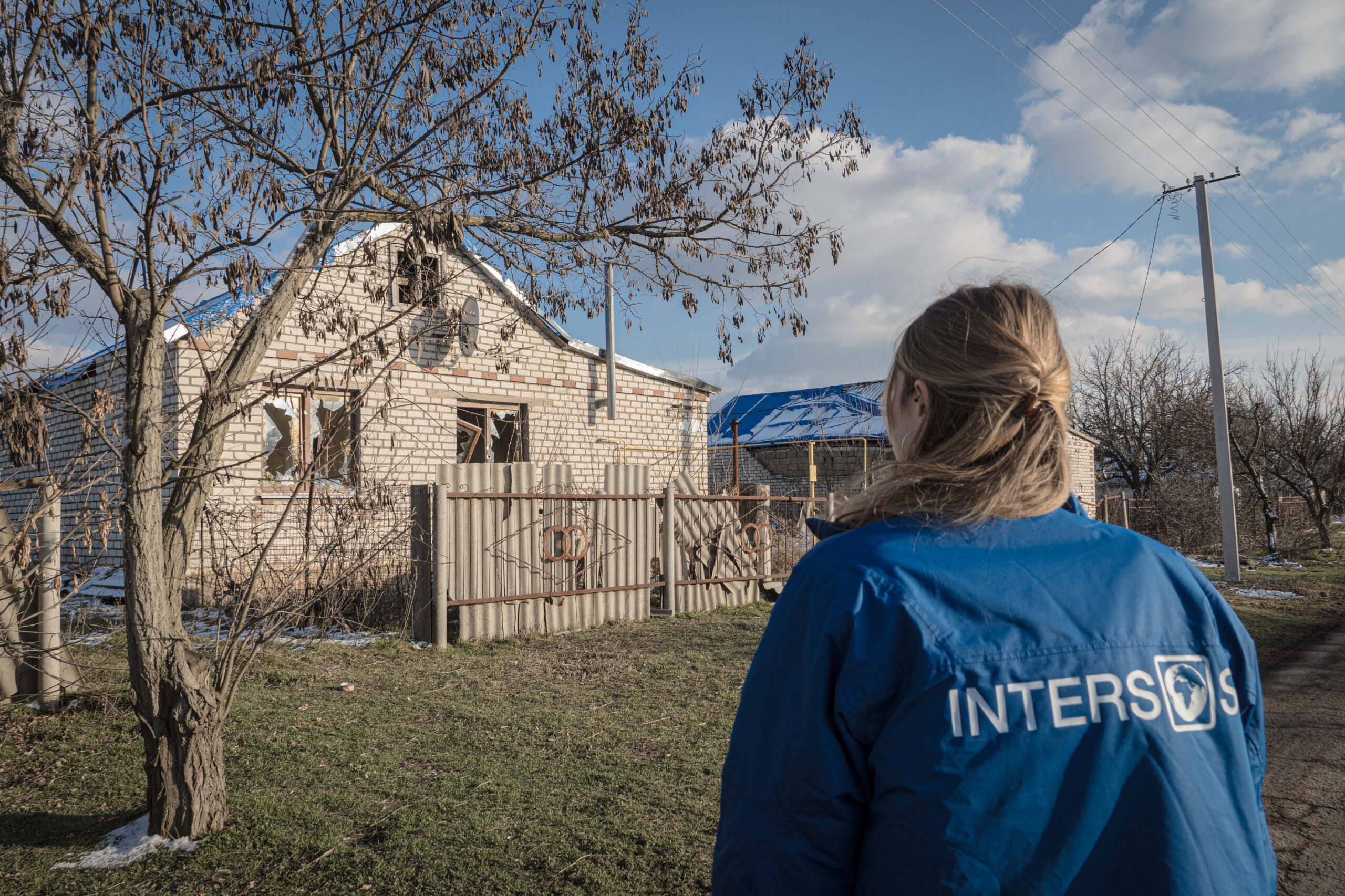
The end-of-year overview once again highlights a massive humanitarian crisis. An estimated 10.8 million people require humanitarian assistance, 3.7 million are internally displaced persons (IDPs), more than 5 million Ukrainians are living as refugees across Europe, while 4.1 million people have returned to their towns or villages only to find homes and infrastructure often destroyed or contaminated by explosive remnants of war. More than 62% of IDPs report that their homes have been totally or partially destroyed or occupied.
Attacks on civilian infrastructure continue to worsen humanitarian needs and restrict access to essential services. Between December 2024 and December 2025, more than 1,000 energy facilities were hit, accounting for about 70% of the total, causing recurring blackouts that disrupt heating, water supply and essential public services. Water systems are regularly damaged, severely limiting access to safe drinking water. In areas close to the frontline, over 1 million people have been left without safe access to water due to damaged networks and the lack of electricity needed to operate pumping stations.
In addition, more than 300 hospitals and health facilities and around 480 schools and education-related buildings have been damaged or destroyed across the country. Today, an entire generation of children in Ukraine is being partially or completely denied the right to education.
Humanitarian access increasingly at risk
Humanitarian conditions are most severe along the frontline, but also along the border with Russia in the regions of Kherson, Kharkiv and Sumy. Humanitarian access to areas occupied by Russian armed forces—such as southeastern regions of Ukraine—and to high-risk areas closer to the frontline remains extremely limited. Donetska Oblast, in eastern Ukraine, continues to be at the center of the most intense ground offensives in 2025.
The situations in Kharkivska, Khersonska, Luhanska and Zaporizka Oblasts are also alarming, as they are identified as the main areas of origin for internally displaced people due to the intensity of fighting. The southern city of Odesa, the capital Kyiv and northern regions have also experienced very high levels of insecurity, which increased during the final months of 2025.
The social groups most affected by the conflict are older people, who often choose to remain in their places of origin despite the dangers due to a lack of alternatives or difficulties in fleeing; people with disabilities and chronic illnesses, who face major mobility barriers that undermine their ability to seek safety; and single-parent households, largely composed of mothers and children as a result of the conflict.
Women often report the highest levels of psychosocial stress, as they are required not only to care for their families but also to take on community service roles due to the absence of men called to fight at the frontline. This is particularly evident in villages of Khersonska Oblast, where women manage community centers that distribute food, blankets, drinking water, hygiene products and other essential items for daily survival in a war context.
Among the most urgent needs are primary healthcare, psychological support, and materials to help people cope with the harsh winter without electricity or heating. At the same time, funding cuts and the constant danger of attacks in the most at-risk areas are hampering the ability of humanitarian organisations to reach those in need.
Our intervention in the field, in the most remote and high-risk areas
Despite the relentless humanitarian crisis and the commitment of humanitarian organizations such as INTERSOS, funding remains a critical challenge. The 2025 Humanitarian Response Plan is only 45% funded, leaving essential services such as protection, water and heating severely underfunded at a time when harsh winter conditions must be faced. Humanitarian access also remains limited in several areas due to high insecurity and the destruction of key transport routes.
“In 2025, INTERSOS reached more than 100,000 people through health projects addressing physical and mental health needs, humanitarian protection, the distribution of essential items and other assistance activities,” says Filippo Agostino, INTERSOS Head of Mission in Ukraine. “The situation remains extremely tense, with continuous shelling in several parts of the country. Our work continues despite significant challenges and serious security risks, particularly in the Kherson and Kharkiv areas, where we are supporting multiple communities.”
Protection
Among the projects active in the field, in 2025 we provided protection services, thanks to the support of the European Union, in the areas of Donetsk, Kharkiv, and Zaporiska, particularly in the most remote and isolated areas. Our aid reached 20,311 people, including 3,416 who received psychosocial support and 1,908 people with disabilities.
INTERSOS humanitarian response in Ukraine began in 2022, with emergency assistance provided to thousands of internally displaced families and refugees across the borders into Moldova and Poland. Today, operations continue and are focused on the southern and southeastern regions of Kherson and Mykolaiv, as well as Kharkiv and Sumy in the east of the country.
Humanitarian teams, through mobile units, also reach the most remote areas, travelling long and dangerous routes to ensure a constant presence on the ground and to avoid leaving isolated communities without support or services.
“We operate directly in the field with our teams or through well-established local partners. Since last November, we have also been working in transit centers for displaced people in the cities of Lozova and Kharkiv, providing psychosocial support, distributing essential kits and offering assistance for the prevention of gender-based violence,” Agostino explains.
The issue of internal displacement has become particularly critical in recent months: from September 1st to today, nearly 36,000 people—mainly fleeing Donetsk (a 50% increase)—have been registered, with most finding shelter in the cities of Kharkiv and Lozova.
As temperatures drop and heating becomes increasingly difficult for many communities, INTERSOS has delivered approximately 400 tons of firewood for stoves to families in Kherson and Mykolaiv. In addition, a new project is being launched to identify mine-contaminated areas across the country. Ukraine is considered one of the most heavily mine-contaminated countries in the world. By June 2025, more than 139,000 square kilometers of land were classified as contaminated by mines or other explosive remnants of war (UN source).
INTERSOS is leading a large-scale initiative involving several local organizations aimed at raising community awareness about the presence of mines and marking contaminated areas, distinguishing them from safe zones, in the regions of Kherson, Mykolaiv, Kharkiv and Dnipro.
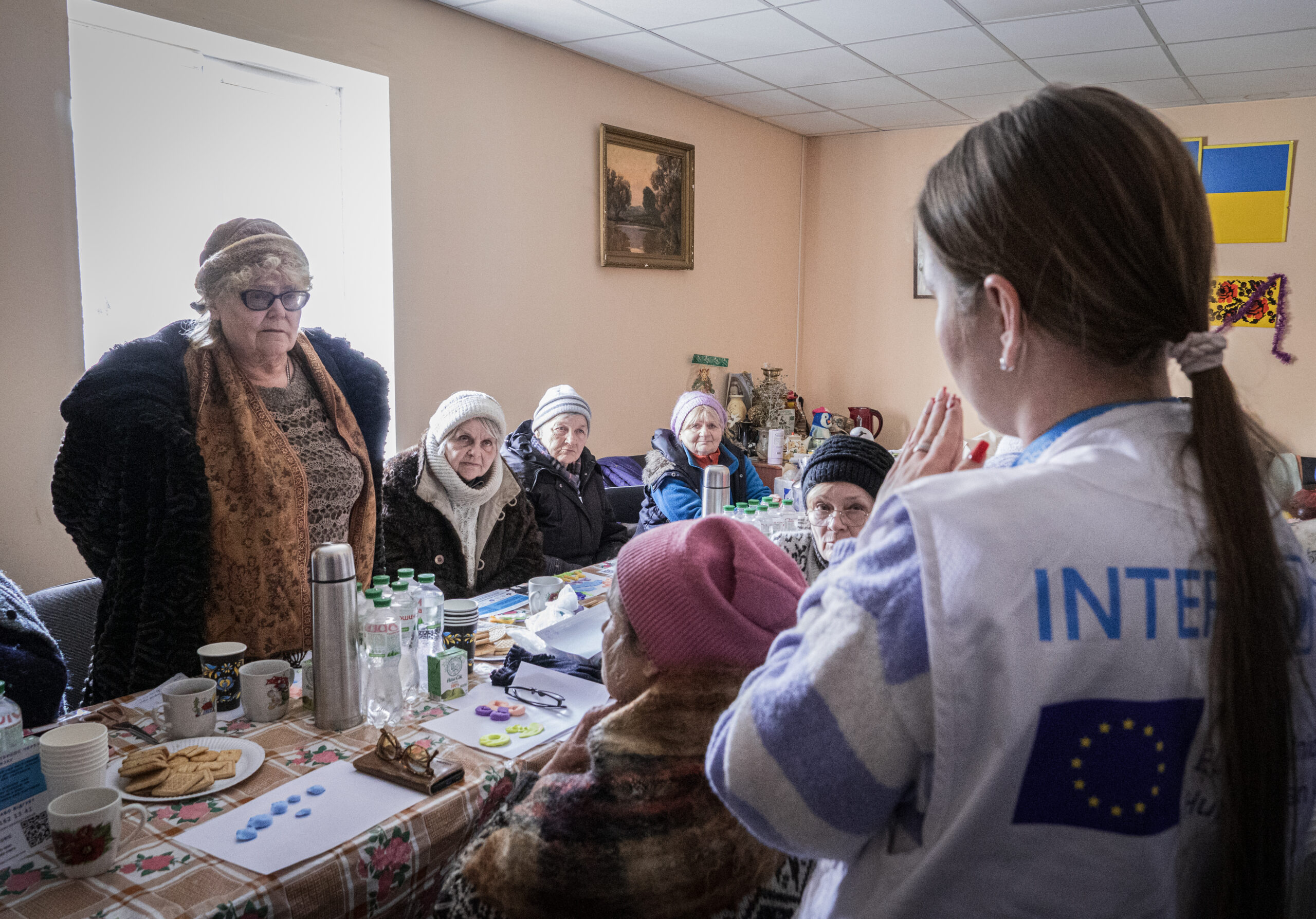
Lyudmila Kovalenko is 68 years old and formerly lived in the village of Tsyrkuny, Ukraine. Her son is fighting on the front line, like all Ukrainian men between the ages of 18 and 60. Today, she and her husband are displaced within their own country and face the daily difficulties of a life marked by conflict and the destruction of their home. When their flat was destroyed, their lives changed radically. Lyudmila is one of many women participating in psychosocial support activities organised by INTERSOS thanks to funding from the European Union. It is one of the best moments of her week: there she can find some peace, trying, for a short time, not to hear the sound of air raid sirens and fighting in the distance.