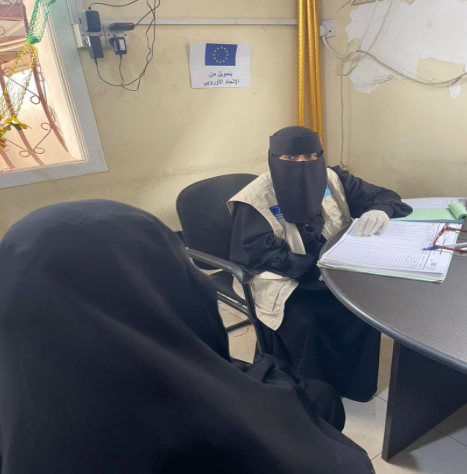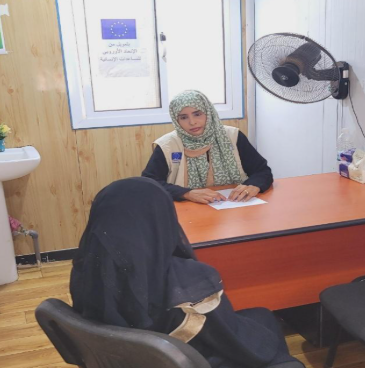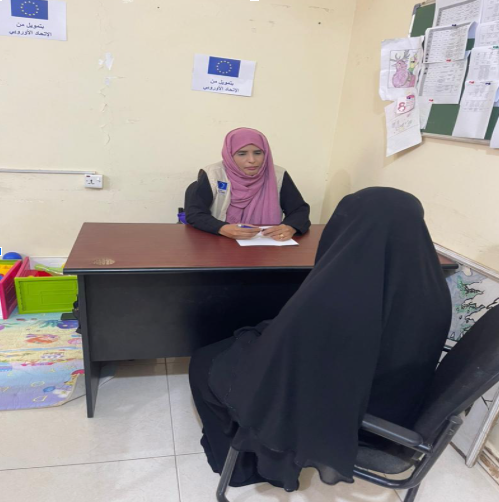
Yemen has been facing a severe humanitarian crisis for almost a decade. The internal conflict, which began in 2014 and has never fully ended, has forced millions of people to flee their homes toward other areas of the country or beyond its borders. The high number of internally displaced people further expands the scope of humanitarian action. At the Al-Rybat reception camp, we offer medical care, psychosocial support, and financial assistance to numerous families who have lost everything.
The internal crisis that has gripped Yemen for years has worsened further with the escalation of regional instability that erupted with Israel’s war in Palestine in October 2023, and the subsequent attacks involving other countries in the region, such as Syria, Lebanon, Iran, and Yemen itself, which have made the country’s socio-economic situation even more fragile.
Even today, countless displaced families—often without access to essential services such as healthcare, nutrition, education, and safe housing—live in informal settlements or in sites set up by local authorities, with no possibility of returning to their areas of origin, which remain unstable, destroyed by conflict, or deprived of basic goods and services.
In Yemen, nearly 20 million people are in need of humanitarian assistance, and the number of internally displaced people exceeds 4 million, making Yemen the country with the fifth-largest displacement crisis in the world, according to data from OCHA—the United Nations Office for the Coordination of Humanitarian Affairs. These people continue to face enormous challenges as they try to survive and rebuild their lives amid insecurity and scarce resources.
The Al-Ribat camp for internally displaced people, located in the Lahj governorate, is one of the main camps in the country, hosting tens of thousands of displaced persons who fled their hometowns. Here, INTERSOS—with the support of the European Union through a project active in the governorates of Hajja, Aden, and Lahj—provides essential services such as medical care, psychological assistance, and distribution of basic goods. Fatima, Wafaa, and Inshiraah are three of the people who have received support from INTERSOS. Their stories recount not only the difficulties they faced after displacement, the lack of trust in the future in a crisis-stricken context, and the total absence of prospects, but also the possibility of building something that offers comfort, care, and the humanitarian assistance needed to live with dignity.
Forced to flee the conflict, Fatima arrived at the Al-Rybat site with her children and nothing else. Here, the INTERSOS mobile clinic became her only source of healthcare and protection during her pregnancy. When she gave birth to Ahmed—born underweight and with severe respiratory difficulties—the newborn was immediately transferred to Al-Sadaqa Hospital. After many days of intensive care, Ahmed was able to return to his mother. Today, thanks to the continuous and attentive care of the mobile clinic, Ahmed grows stronger every day. Without this intervention, his life would have been at risk.
Inshiraah is 39 years old, and she too fled because of the war. Together with her family, she left the Taiz governorate after bombings struck their village and destroyed her home. In Aden, her husband abandoned her and their six children, leaving her without support and with debts to repay. She and her children were at risk of eviction and ending up on the street, but the financial assistance provided by INTERSOS allowed her to pay her arrears and keep their home. In addition, both she and her children also received psychosocial support, medical care, and basic necessities.
Wafaa’s story also speaks of war and total loss. Fleeing her village in the Hodeidah governorate in 2020, Wafaa became the primary provider for her family in the Rybat camp, where she lived in extremely vulnerable conditions. The daily challenges, having to face everything alone, and feeling responsible for the rest of her family with very few resources made her emotional and mental stability extremely fragile, leading her into deep depression.
The INTERSOS humanitarian team, thanks to the support of the European Union, provided an integrated response that included psychological first aid, specialist therapy, and group support sessions, as well as financial assistance. Thanks to this intervention, Wafaa began to regain her confidence, stopped isolating herself, and started taking care of herself and her children.
Humanitarian assistance in Yemen remains essential. After many years, INTERSOS continues to operate in the country, reaching even the most remote areas and standing alongside displaced and conflict-affected populations, providing mobile health services, psychosocial support, protection, and emergency assistance.